Blog

Weekly Habits for Super-human Success – Meditation

“My blogging life is basically goalless. I like the zen nature of that, and paradoxically, it improves results.” – Seth Goden

“Before enlightenment, chop wood, carry water.  After enlightenment, chop wood, carry water.”             – zen proverb

This week I want to be able to share the basics of what meditation is, share the benefits, which are many, and give a basic approach to help you get started. I do not want to get into the religious, or spiritual aspects of this, each of us can choose our own way. Just like a lot of other things in life, there is more than one way to get there, so it will require some experimenting to find what will work best for you. However, once you do find what does work best for you, the results/rewards are pretty cool!

So what is meditation? Well, to paraphrase Deepak Chopra, it can be summed up as being awake while sleeping,developing your “witnessing awareness.” What the science shows, from countless brain scans, is that when your body and mind are relaxed enough, that your brain waves shift from an alert rational state of beta brain waves, to the slower frequencies of alpha, or even theta brain waves. To avoid any hokus pokus magic about these states. I want you to beware that your brain moves through these different states all the time. Every night when you go to bed, multiple times throughout the evening, and through the morning. If you have ever experience road hypnosis on I-80 in Ohio, or daydreamed while in a lecture in college, you have experienced such transitions in states. So there is nothing magical about the existence of these states or brain waves, but what is magical, is that we can train ourselves to engage in these different states of consciousness actively, rather than passively. This is in fact the premise of Buddhist meditation in the east, Hypnosis in the west and the more recent development NLP (Neuro-linguistic programming) made famous by Tony Robbins.

Although I won’t say hypnosis and meditation are exactly the same thing, they are similar.  Trance’s fall under this, and so does lucid dreaming. Actually for the purpose of this post, that exhilirating moment when you realize you are dreaming is the best way to describe it.  A lucid dream is a very cool experience of remaining in the dream, but at the same time, being aware of it, and even controlling it.  What meditation allows us to do is train our mind to gain more of this kind of ability in a gaining more insight and control over these different states of consciousness. In this way, it is very similar to training our bodies, or learning any other skill set.

Now the benefits:

The physical benefits include:

  • Lowers high blood pressure
  • Lowers the levels of blood lactate, reducing anxiety attacks
  • Decreases any tension-related pain, such as, tension headaches, ulcers, insomnia, muscle and joint       problems
  • Increases serotonin production that improves mood and behaviour
  • Improves the immune system
  • Increases energy levels, but being able to reduce anxiety and nervous energy you will feel much less     fatigue.

Some of the mental benefits are:

  • Anxiety decreases
  • Emotional stability improves
  • Creativity increases
  • Happiness increases
  • Intuition develops
  • Gain clarity and peace of mind
  • Problems become smaller
  • Can even help raise I.Q.

So just from this short list, I hope you can see why, from my perspective , this would be a great thing to include in your weekly, if not daily, practice.  Studies have shown that it helps slow aging, offers help for those with Mental ailments/disorders from mild depression to ADHD, and has even been shown to help children with down syndrome or other mild forms of mental disability. It is not a silver bullet, and it is not some kind of miracle solution or magical potion.  But when done in collusion with intelligently applied strength training and exercise and a nutrient rich diet.  Peak performance is no longer a rarity, or for a select few, but for everybody!  In fact being at your best becomes the new normal.

Now here’s the best part. Don’t try! The harder you try, or more effort you place on it, the more difficult of a time you will have at being successful with it.  For best results I want you to go the other direction, and don’t try at all! Just relax and allow it to happen.  The only thing you really are consciously be involved with will be relaxing your body,  and by this I mean just pay attention and feel it.  Also in the beginning you will only need to set aside about 5 minutes. That’s it! Over time you can increase the duration, but don’t force any of it. It will come. The most important thing is setting aside the time to do it.

Here is what I suggest to begin:

Sit or lay down so that you are comfortable enough to allow your body to relax.

Close your eyes and you can slow your breathing, but you also don’t have to really slow it down, or hold your breath or anything like.  Just pay attention to it and allow it to feel natural and refreshing with every breath.

At this point you can begin relaxing your body. I find the greatest success by beginning at my feet and working my way slowly up to the head. Your brain is still going to feed you that constant stream of thoughts, don’t worry about it, see it for what it is and move on. Almost like your simply watching the news. Become an observer of your thoughts, no judgements, just go with it and allow your body to relax and your head to empty.  We ultimately want to have a still mind, or clear mind, but like I said, the harder you try the more thoughts you’ll have.  Just relax. After 5 minutes gradually wake your body up and go about your day! The benefits will take care of themselves.

Next week we can explore some of the different styles or approaches to meditation and I would also like to share my experience, because it has been really positive. Otherwise, youtube university has a plethora of information out there on the topic, and there will likely be no shortage of meditation instructors in your area, if you are ever interested in learning more from a direct teacher.

Namaste!
Weekly Habits for Super-human Success – The Sauna

“If a sauna, whiskey and tar do not help, the disease is fatal.” – Finnish Proverb

Google ‘sauna research’ and right away, you can see studies which have been done that have found that those who use saunas regularly live longer. More accurately, the more frequently you use the sauna, the longer you are in the sauna, and the statistically less likely you are to die from cardiovascular issues, coronary disease, and heart attack. Actually, the first four results are citing the same study done on over 2,000 Finnish men. So, it is a strong enough sample size to see the associations. So, why does it work?

Well, they have gone deeper with the research and have done more than just summative studies, like the Finnish one, to have learned a few things about what happens at the molecular levels when it comes to DNA and cellular function.

Heat stress, and to a lesser degree, exercise, triggers the activation of several genes, which are responsible for the production of what they call “heat shock proteins.” The heat shock proteins go around and help keep proteins from mis-folding and forming aggregates, which are pro- inflammatory agents that can spread and affect other cells, creating a very unhealthy chain reaction.  The sauna also seems to trigger a well-known longevity gene, FOX03. FOX03 operates as the master regulator, turning on a host of stress-resistance, anti-oxidant genes responsible for a host of protections against cellular stresses and triggering DNA repair. FOX03 is something that seems to become less active as we age. They also know that people who have a polymorphism that produces more of FOX03 have a 2.7-times greater chance of making the century mark. And in mice, those that had the capacity to express more FOX03 lived 30% longer. So, having more of this in your body, or more activated, is clearly not a bad thing.

Heat shock proteins work in a similar way; once activated, they go around repairing protein damage within the cell. For proteins, it is vital that they maintain their 3D shapes in order to function properly.   Of course, the stress of life causes damage to proteins. What is great about heat shock proteins, which are induced by sauna use, is that they help keep other proteins from mis-folding and forming, and as Dr. Rhonda Patrick states, aggregates.

So, that’s the P.E. teacher version of the science as to why it seems to work so well. I will warn you: the saunas were hot! Pushing 79 degrees Celsius (or 174 Fahrenheit), they also found the best results came when usage lasted longer than 20 minutes. They also found that the more frequently it was used in a week, the greater the results statistically. That being said, once a week is better than not at all, and if you are older and retired, you might have greater freedom to enjoy these at a local club. If you happen to own a sauna, great! Ultimately, I think the results and discoveries of the studies are great, and I would encourage this, especially from a relaxation stand point. I will also say that it is not the end of the world if you don’t get to the sauna, and also be very careful of overdoing a session. You might want to do a little additional research of your own as well so that you are not risking the dangers of overheating and heat stroke. But knowing the benefits are so good–I really like the idea of making this part of a weekly routine. I think you will, too.

Weekly Habits for Super-human Success – Taino the Horse

“Horses make a landscape look beautiful.”
― Alice Walker

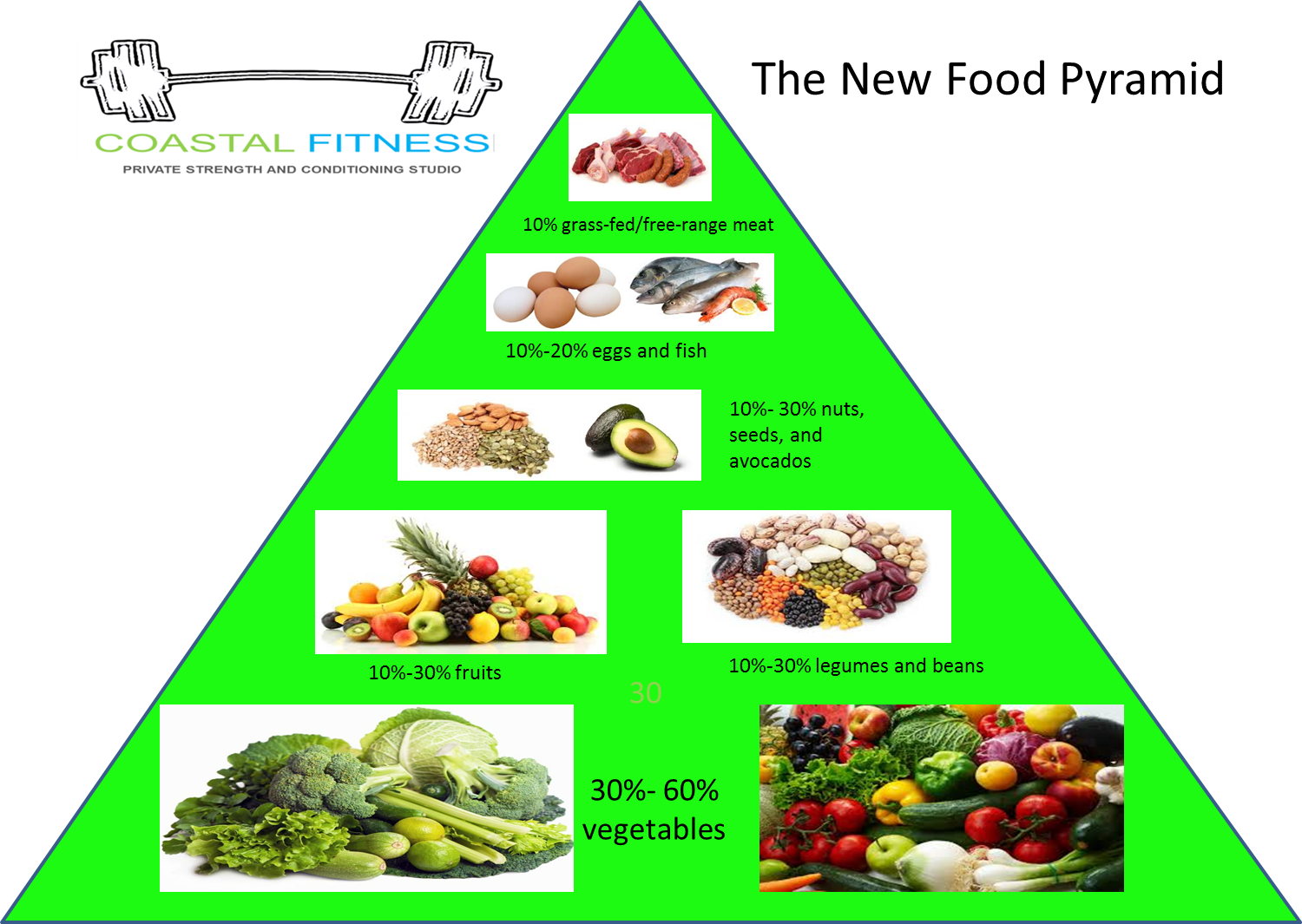
Just across the road from my apartment building, there is a grassy field about the size of a rugby pitch that runs along an inlet going out to the Caribbean Sea. In this field, there is a horse that I often see hanging out there. I named him Taino in honour of the tribe that flourished here before the Spanish arrived.  Taino the horse eats grass all day long. He doesn’t run a whole lot, he walks around sometimes, but mainly, he eats, and is more or less left alone to do so. The horses are left alone here in Puerto Rico. Sometimes you will see some of the kids riding them, although, technically, this is illegal. The kids are good to the horses, and when not riding them, will take care of them and lead them to grassy fields–such as the one by my apartment–to graze. It’s pretty cool! Similar to India, without the religious aspect regarding how the cows wander around. Here, it’s the horses. Now, this particular horse, Taino, eats a lot. For the last few months, whenever I have seen him, that’s all he seems to do: eat, and eat, and eat. You would think for the amount he eats, and as lackadaisical as his days seem to be, he should be one fat horse! But he’s not. He is a lean, mean, grass-eating machine. He may not be as muscular as a Clydesdale (Budweiser work horse), or a thoroughbred, but he is definitely not fat! This holds true for most herbivores, and more specifically, grass grazers. Cows can eat a lot of grass and they won’t get fat. They will be super healthy, strong, lean, and delicious! But that is a problem for the big meat producers. They need their cows big, fat (really fat), and able to feed a larger number of people–or earn more money per cow. So, instead of grass, they are fed corn and other sources designed to fatten them up. Factory farming, and therefore the majority of the meat you will find in the grocery store, is fed this way. Now, because they are eating food they are really not supposed to eat, they experience a whole host of problems. I won’t rehash previous blogs, but I will make it clear that the same corn-based products, which are designed to fatten up our animals and cause them to get sick, is what we see a plethora of on the shelves at all the big-name grocery stores.  So, are we surprised that we get fat and sick too? We can’t eat grass, but there are a whole host of leafy greens and other vegetables we can eat. If you can make the transition, where up to 60% of your diet is in the form of leafy greens and the rest, you are going to find that getting fat is something that is really hard to do, or be. Even though you can download it from the site, I pasted this new and improved food pyramid to help you see the percentages/ratios of food we are looking to consume.  Making the shift from a calorie-rich to a nutrient-rich diet will lead to some amazing changes in both how you feel and how you will look. Hang on! Nothing about this post dealt with something you can do once a week. You’re right! This is a daily thing I would love to see you start doing, but that being said, if you can make this transition to a nutrient-rich diet, you’ll find that if you happen to cheat, only once or twice a week, and spring for that fettucine alfredo, or dessert, your body will be in a much better place to handle the treat, rather than the “treat” being the bulk of your diet.

The New Food Pyramid

Weekly Habits for Super-human Success – The “Sprint” Session

“Motivation is what gets you started. Habit is what keeps you going.”
― Jim Ryun

We follow the high-intensity strength-training session up with a ‘sprint’ routine:  Lifting once a week is a great thing and will keep you from overtraining, but you can’t be a couch potato the rest of the week either.  It also does not need to be an all-out Usain Bolt sprint program either.  If you play a sport that practices once or twice a week, plus games, you have this covered. If you swim, or ride a bike, or are into Martial Arts, then all of this is great!  If you are not doing something like this, then this would be a good thing to add into the weekly habits.  The point here, though, is to modulate the intensity to really get the heart pumping.  James Timmons, Ph. D.  and McMaster University, as well as other institutions, have proved what effects of 30-second sprint sessions on a stationary bike and the effects of just 3-5 sets, 2-3 times a week have on greatly improving VO2 max and other health indicators.  Again, if you like running for an hour, okay, but this will do the same thing in a lot less time!  This is when you can also do body-weight exercises in a circuit, going really hard for 20-30 seconds, then resting for 20-30 seconds, before repeating or moving on to the next one.  There are now a gazillion different routines out there on the internet from Crossfit WODs to Drew Baye that can be soul-crushing and only take 10 – 15 minutes to do.  Oh, and there is my download too. And if you lifted on Monday, then you would not have to worry about doing this until Thursday.  You could do this more than once a week, and some weeks you might miss, and that is okay.  Life happens, but as stated before, by limiting the goal to once a week, it helps make it easier to stick to over the long run.

Weekly Habits for Super-human Success – Lifting Once a Week

“The tiniest changes yield massive results.” – Tony Robbins

A full-body routine covering all the major muscle groups, doing 5 – 10 compound exercises, one set to failure, has been shown time and time again now to be highly effective.  Is it the only way? No, but if you are a full-time father and have a job too, this is efficient and will get you the most muscle, strength, and other health benefits in very minimal time.  Plus, when you do this right, recovery from this has proven to take, on average, a week.  Now, some people recover faster, and some slower, and you can always tweak this to your personal needs, but in the spirit of the post series about weekly habits, you can start with this and then take it from there.

This is also the first one I recommend you start doing.  Because of the time being relatively short in duration and the weekly frequency, your ability to stick to this greatly improves.  Then, as you get comfortable with it and you see the gains, you could start adding in the other parts to the weekly program.  Also, whether it is machines or free weights, honestly, either is fine.  If you are a power lifter, then using free weights would probably be the way to go, but for what we are trying to drive home, regarding momentary muscular failure, both work, so it comes down to what you feel most comfortable and safest with.

So what should it look like.  Well, with my clients, I start them off with the smith machine squat. Then deadlift, chest press, pulldown, then I use a glute-ham developer (It’s awesome!) I named Ghilda.  Then I do a hip extension exercise, then we go back to the upper body doing shoulder presses, then rows.  Depending on the client and how the training is going, I will do a set of bicep curls and tricep pushdowns, but this is not a requirement due to the level of work these muscles will have already done in the other lifts.  I finish with an abdominal exercise, which I alternate with my clients.  Some weeks I use Dr. McGill’s stir-the-pot.  Other weeks I throw in Coach Barry Ross’s torture twists.  And sometimes, although sparingly, I will have them do weighted crunches.  I tend to heed Dr. McGill’s research,expertise, and advice in not wasting spinal bends on needless sit-ups, when the exercises above accomplish so much more in abdominal activation and improving the strength of the whole “corset” of muscle.  Then they are done, and I send them home huffing and puffing with a feeling that they have been detached from their bodies as result of all the fatigue.

On a side note, I know Dr. McGuff does upper body exercises first and then does the leg press.  I tend to follow Arthur Jones’s approach, working the largest muscle down to the smallest.  But I have also found that results tend to be better breaking up the upper body with leg exercises in between.  The added recovery between the sets seems to help with consistency in the weekly progression.  I also won’t keep the order steadfast.  Sometimes I will flip the model and do the upper body to start before doing the legs and I will on occasion mix it up, where after the two leg exercises, I will do shoulders first rather than the chest press.  That all being said, I don’t deviate too much, because there really is no need.  This type of training is about intensity and progression and building overall strength.  As much as I like Crossfit and other programs, don’t fall for the hype of “functional training,” and don’t be confused about training the muscle, and training or practicing for a sport.  There is difference, and true success is in knowing the difference and training accordingly.

The last piece of this is the progression.  Each week, you should be getting stronger!  Now, that can come in two forms.  One is  adding weight, the second is increasing the number of reps.  When adding weight, I generally increase by 10 lbs each week and 5 lbs for females for their upper body exercises.  Starting out, strength gains come quick and the curve looks very similar to a sprinter’s acceleration curve; over time, as you reach closer and closer to your potential, the gains will slow.  That is when it will become as much an art as a science.  This is when changing certain exercises comes in handy, like substituting squats for Bulgarian splits. Instead of adding 10 lbs, it might only be 5.  You can adjust the volume and use lighter weight pushing for a higher number of reps, and then other weeks, increase the weight, forcing a lower number of repetitions to be completed.  Negatives, used sparingly, are great for this, but remember the ultimate goal in any workout is failure.  Reaching failure is the stimulus we want that triggers all of the health and strength benefits we are looking to achieve.  Then enjoy the rest of your week before you go and do it again.

Weekly Habits for Super-human Success – Introduction

“8 days a week!”  – The Beatles

So after having some email communication this past week with my Pop, he hit me with a really cool question.  After sending him another video on nutrition, he wrote back with a great statement and the question.

“Here is what we / I know: diet needs to focus on micronutrients. Lift weights once a week. ‘Sprint’ exercise ‎once a week. Walking lots every week. Fast for two days every three months to stimulate stem cells.  Sit in a sauna a minimum of three days a week to stimulate growth hormone.”

“How do you package that into something easy to use and apply?”

My response to him was… You just did!  My Pop packaged this perfectly and summed up a lot of people’s research and expertise into just a handful of phrases.  So now we can break this down, step by step, to hopefully help you put this into practice.  All of this great research and knowledge is useless if we can’t find practical ways to use it.

Each week I will discuss in more detail each aspect/day of the weekly habits.  I’ll do my best not to let the geek in me get too carried away with all the science, but I will definitely make sure you are aware of the benefits and reasons for this approach and, of course, I will include the links if your curiosity gets the better of you, too, and you wish to take the time to dive in.

So to begin this article, I quickly googled the origins of the 7-day week. It is pretty interesting and, naturally, the geek in me rather enjoyed exploring it.  Needless to say, it goes way back to the Babylonians, if not sooner. The earliest evidence of an astrological significance of a seven-day period is connected to Gudea, priest-king of Lagash in Sumer during the Gutian dynasty. It is speculated that it could have been based on the lunar quarterly cycle.  A lunar month is 29 days and 12 hours.  It is cited in the Epic of Gilgamesh, specifically the flood myth, saying it rained and stormed for 7 days.  The Hebrews used the 7-day week, and Genesis tells us the earth and man were created in 6, and that God rested on the seventh.  So the number 7 and the 7-day week have been around almost as long as civilization.  Even better, civilizations and empires have come and gone, but the weeks have stayed the same.  The Romans had an 8-day calendar, but the 7-day week became more popular and ultimately, when Constantine made Christianity the state religion in the fourth century, the 7-day week came right along with it.  The French tried to replace it in 1793.  That lasted only 9 years, and they reverted back to 7 days (It helped the Catholic Church re-established control), and the USSR tried to change it, but to no avail.  On a side note–and this did not come up in this work–but in previous research, when a woman goes through her cycle, (on average) the various hormones involved play their part, each taking a turn in “spiking.” Remarkably, each phase roughly lasts a week.  It is a stretch, I know, but whether the week is natural, or has just been around for so long that it seems that way, it just seems to work.  Even in the movie, The Ten Commandments, starring Charlton Heston, they tried to explain the week with having Moses explain to Pharaoh that the Hebrew slaves would be more productive if given one day of rest every 6 days (creating a 7-day, pyramid-building week).

The naming of the days involves the moon, the sun, and gods.  In the Latin world (specifically French and Spanish), they use the names of the Greek/Roman gods.  English uses the same gods, but instead  uses the Norse names for the similar god for the weekdays.  I just thought that was kind of neat.

But to the point, regardless of the origin of the week, it just seems to work and rather than fight it, or fight ourselves, or try and do too much in a day that we never seem to have enough hours for, or try to do too much in the week, we can spread out the various practices over the entire week. Thus, over the long run, accomplishing a lot more and being much healthier and happier.

The weekly habits we will be looking to incorporate are:

  1. High-intensity strength-training (only once a week)
  2. A form of ‘sprint training’/short-duration, high-intensity cardio (only once a week)
  3. A movement practice over multiple days (walking to work; grocery shopping may not be enough alone, but it adds up and, therefore, counts as part of it)
  4. The exploration of a meditative practice (5 – 10 min. daily, or 30 min. – 1 hour once a week)
  5. Hot/cold therapies (the sauna treatments)
  6. Eating a nutrient-rich diet and the inclusion of a possible cheat day
  7. Fasting

Now, you don’t have to wait for me to introduce each aspect of the plan in my weekly blog articles to get started on the whole thing. However, if you are new to all of this, then you could take your time, and each week, pick a day to incorporate the next piece of the pie–can a coach say pie?–puzzle! the next piece of the puzzle. Next week, we will dive into high-intensity strength-training and I will share with you what I start my clients with.  Otherwise, you can read my previous posts, #5 and 6, “Why I like High Intensity Training,” Parts 1 and 2 (dates:  April 27th, 2015 and May 4th , 2015 respectively).

http://www.todayifoundout.com/index.php/2013/04/the-origin-of-the-7-day-week-and-the-names-of-the-days-of-the-week/

http://www.hermetic.ch/cal_stud/hlwc/why_seven.htm

https://en.wikipedia.org/wiki/Week

Back Pain and the Gokhale Method

“Vodka does not ease back pain. But it does get your mind off it.”  – Fuzzy Zoeller

This week’s post is really just a share.  After my last few posts being rather long-winded, I can fortunately make this one much shorter, but hopefully extremely impactful.  The subject is back pain; something many of us deal with on a daily basis.  When doing my micronutrient research, I came across the Gokhale Method as taught by Esther Gokhale.  I loved it!  I love it to the point where I contacted them about classes and becoming certified to teach it.  Why do I like it so much?  Well, she—after experiencing some serious back problems that required surgery—decided to take a real hard look at how we in the West/modern civilizations walk the way we do, tend to sit the way we do, and why that seems to cause so many problems.  Then she looks at modern tribes, who virtually have none of the issues we have, and took a hard look at how they do it.  It is subtle, but the differences could make a huge difference to how you go about your day-to-day activities; from how you sit, to how you walk, even to how you can sleep. So, I have included the links to both talks.  Each is roughly an hour, but if you know you are struggling with bad posture in the workplace, or if you are dealing with some back discomfort, this is going to be worth your time.  Even if you are not dealing with these problems, from a preventative point of view, it is still worth the time.  There are a lot of things in modern society that are working against us, but with a little knowledge, we can better prepare and deal with it.

Now, don’t get me wrong; we used to do it better.

j curve

The image above is actually one she uses. She is comparing a modern anatomy textbook to one from 1911.  You can see the obvious differences.  The one on the left is the modern one and is very much an “S” curve.  The one on the right is the one from 1911 and is described by Gokhale as a“J” curve.  We want the J curve!  It is the J curve that you find people from tribal cultures having. It is also these same people from these cultures that have the least incidences of  back pain and far fewer back problems, period.  In the J curve there is still some curve, but you can also see the vertebrae do stack much better being that much  better at dealing with the forces that act on the vertebral column.

https://www.youtube.com/watch?v=S9wySqwN4x8 (sitting)

https://www.youtube.com/watch?v=mtQ1VqGGU74 (walking)

Micronutrient Deficiencies, Supplements, and My Shameless Plug (Part 2)

“To all my little Hulkamaniacs, say your prayers, take your vitamins and you can never go wrong.”        –  Hulk Hogan

Here in part 2 I really want to make you aware that supplements, both the vitamins and protein shakes, are just that: they supplement your diet.  They do not become your diet.  You should still eat as well as you can.  Supplements can just help out where your diet might be lacking.  If you are extremely active, it might be tough to meet some of your protein needs.  A shake will help.  If you live in Canada or Norway or anywhere north of the Tropic of Cancer, half the year it will be really tough to get enough vitamin D from either the sun or your diet; a vitamin will help.  So let us be clear that these products are only there to augment or top off your nutrition, not completely replace it.  Also, depending on how well you are eating, you may not need them at all.  But according to the latest statistics I’ve come across, (part 1) the majority of us are deficient in several. I have included a link to the Linus Pauling Institutes breakdown of the essentials and what their recommendations are to avoid such deficiencies, which result in accelerated aging and chromosome breaks etc.  It’s a handy tool.  I have also included two charts from fitday.com These charts shows some great foods, there amounts, and then breaks down the micronutrient intake and break down of macro nutrients (Fat, Protein, Carbohydrate.)  Spoiler alert! It involves a lot of cups of vegetables.  This is good, but let’s be honest… it is hard to do.  We don’t get to chew on bamboo shoots all day like a gorilla,  so I will admit there is a level of practicality/life/modern day circumstances that will make this tough.  I will also remind you that the “RDA”   is based on the minimum of each nutrient to avoid such deficiency diseases such as when you are so low in vitamin C and get scurvy, or way too low in vitamin D and get rickets. They are not based on what the optimums are.  Fair enough; as I pointed out in part 1  we are just now really starting understand the gravity of “age related” diseases and Chromosome breaks which are occurring when our nutrition is not optimal.

I have also included a link to the film, “Food Matters.” This film explores the advantages and benefits of what can be described as mega-dosing of various nutrients.  These are mega doses by the RDA standards, but are by no means putting you at risk for overdosing, which is possible.  As stated before too much of something can be just as harmful as too little.  We have had this discussion as it relates to exercise, and it certainly holds true for supplementation of the essential nutrients and minerals.  You can overdose on iron.; it is hard to do, but can happen.  You can overdose on vitamin D; it too is also really hard to do, but it can happen.  So I just want it to be clear, as it pertains to mega-dosing, for the sake of this post, that I am not recommending overdosing, and want it to be established that you will find it very difficult to find any supplement, when following the serving size directions, that will put you anywhere near being at risk.  But you should also be aware, because accidents can happen.

Now for my shameless plug.  Three years ago, I was approached by a gentlemen who represented a company that sold a product, called lifeshotz, that was designed to be a natural alternative to the energy drink market, such as your Redbulls and Monsters.  At the time, I was working for a chiropractor, who was part of a franchise that had their own line of supplements, so my first reaction was, “No, sorry, I already work for a company that offers something like this…. Wait a minute! I’m not going to be working for him anymore. I’m moving to Korea!  Sure, I’ll meet with you.”  So I did.  Now, since working for the Maximized Living company, I was already aware of the research and benefits of optimal supplementation, so I did not need a breakdown of the science behind it.  When I got to look at the vitamin D and vitamin B levels, I was already sold.  My only problem with Maximized Living, as a franchise, is that you have to be a chiropractor to join.  So, there would be no way I could make a real living working for them and selling their products.  But what this gentlemen was offering me was that solution.  He was the first person to explain to me how referral marketing really, at its core, works; why Mary Kay and the like have been so successful, and how, when it is done right, you can be quite successful, too.  Okay, now this wasn’t the first time I have had someone try and sell me the dreams of financial success and freedom, but I was very interested in the product.  So I bit and I tried it out for a couple of months.  I also had something to compare it to.  My rugby season was starting up and I know how I feel when I play those first couple of games.  The next day I would feel like I had been hit by a goddamn truck, and would be hungover to boot.  So if this product was even remotely beneficial, surely I would be able to feel a bit of a difference.  I’ll spare you the suspense. I did.  I took the product for a week as they recommend before I  played rugby that weekend.  Then, I went out with the team and drank.  That’s kind of normal for many rugby players.  Now, I had also played more than one game that day, which was extra taxing on my body, especially being the first big weekend of the season, so knowing what I’ve been like the next day for 15 seasons or so before, I figured my Sunday would be a hungover, hit-by-a-truck feeling, write off.

This is what sold me.  The next morning, I woke up and I got out of bed.  That’s it.  No amazing feelings of feeling like Superman, no euphoric states of enlightenment.  I just got up and made a cup of coffee.  That is what surprised me.  I felt a little stiff, I could tell I had worked out or played, but otherwise, I felt okay.  I also didn’t have a hangover.  Considering I had my fair share after the game, that also pleasantly surprised me.  Now, before writing this post and my shameless plug, I have been taking Lifeshotz fairly consistently for nearly 3 years.  Before I decided to pursue it as a viable business opportunity, I convinced my parents to give it a go.  They do not eat as well as I do, nor are as active, so they would be a great test to see if it helped them.  It has! My mum generally works 10- 12 hour days.  What she found was instead of feeling that energy boost and energy crash that the “energy drinks” offer, she had endurance. She now, for the last 3 years, works all day, can come home, and instead of wanting to just go to bed, has a glass of wine, and then enjoys some dinner and relaxes, and then she goes to bed.  My old man experienced the same thing; not an energy jolt, but just an overall feeling of well-being and the capacity to do more in a day.

Now, my grandmother was a great example.  She’s 89, and what we were discovering is a large number of her “prescriptions”  were prescriptions for vitamins.  She had a prescription for vitamin D, vitamin B,  and a few others.  The prescriptions are not cheap.  A lot of what she was getting from the pharmacy is in Lifeshotz, so she made the switch.  Lifeshotz is a premium product, but she is saving a lot of money taking it.

Now I will admit a drawback, it is not a complete essential nutrient solution, there is no fish oil or all of the essential minerals, so in that, it is not as good as the “CHORI Bar”, which is.  However it does have a lot, and in the long run, is a savings compared to trying to buy all the nutrients that are in lifeshotz individually.

I would like to conclude this post with the anecdotal tale of the Chicago Blackhawks winning their last Stanley Cup back in 2010, again in 2013, and they just did again in 2015. Yes, they have a great team, great coaching staff, and so on.  But they also have a team physician prescribing the players 5000 IU a day of vitamin D3.  They were the “First Professional ‘D3’ Team.”  As a result, the players felt like they had more energy, more stamina, and felt like they were recovering more fully from each game.  Before, they were experiencing a myriad of issues and injuries, all symptomatic of having a deficiency. Since starting the supplementation protocol, players on the Blackhawks squad are performing better and doing a better job of withstanding the punishment of both the ridiculously long regular season (82 games) and the three best-of-7 playoff rounds before getting to the 4th and final round of the Stanley Cup. That is a lot of hockey, and it definitely takes a huge toll on the body.  As I was writing this, the Blackhawks have just one their third cup in six years. Here is a short quote I snatched from the MSN article.  “As the series turned into a battle of wills, Tampa Bay put forth their final burst of desperation facing elimination. But with several players dealing with noticeable injuries, they didn’t have enough to push back against the playoff-tested and healthier Blackhawks.” (Canadian Press, Stephen Whyno)  (I bolded the healthier part)

Now, depending on your activity level, 5000 IU might not be as necessary, but you don’t overdose until you reach 40,000 IU’s a day, so you really do not have to worry about reaching the overdose limit.  I will conclude this post by saying that there are a lot of positive benefits to supplementation, those that say it is a big waste of money don’t have the whole picture.  If you could get from all your food, that would be preferred, but that is hard to do and not everyone is deficient in the same nutrients.  But if you work a lot of hours or are super active, supplementation can help.  That being said, though, it is a waste of your money if you don’t do the basics of eating better and exercising first.

Now, to finish with my shameless plug and sales pitch, I’m not selling the business opportunity. It is there, but I’m more concerned with recommending the product.  So if you are feeling run down and feeling like your nutrition could be lacking, do your homework.  That part is a pre-requisite. There are lots of brands out there and more being created every year, and your needs will be different, and you will need to look really hard at that, too.  But I like this one, so I’m sharing it with you.  You might not need it, but it is here just in case.


http://lpi.oregonstate.edu/files/pdf/mic/micronutrients-for-health.pdf

www.lifeshotz.com

http://foodmatters.tv/food-matters-film

http://www.examiner.com/article/nhl-s-chicago-blackhawks-the-first-vitamin-d-team-professional-sports

Micronutrient Deficiencies, Supplements, and My Shameless Plug (Part 1)

“The main distinguishing characteristic between man and the lower animals is the desire to take pills.” – Mark Twain


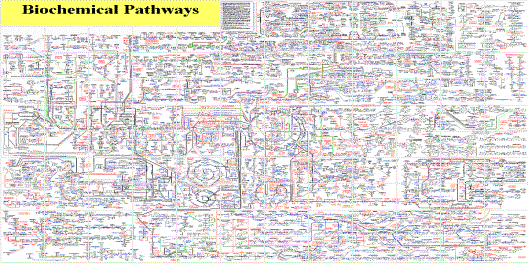
Biochemical Pathways

So as you can see from the diagram above, this latest post has been a massive challenge.  The link below is an hour and eleven minutes long, and it is the most comprehensive breakdown on nutrition and metabolism I have watched so far.  Up to this point in time, science, when it comes to nutrition, has honestly not been well understood. The human machine is vastly complicated and it has taken a long time to understand many of the chemical reactions that are taking place in our bodies, and good scientists will tell you that we still have a long way to go, but we are getting there.

The reality is that there are 40 essential nutrients and minerals that our bodies need.  If we go without anyone of these essential nutrients for too long, we die. But would you be surprised that we are almost all deficient in one or more of these? Would you also be surprised that many of the gold standard, double-blind studies they have done on these nutrients have been designed to fail from the get go?  They have been super expensive to run, and they didn’t tell us anything useful.  Really!  I mean, think about it… how can you run a double-blind study (the gold standard in science) on the effectiveness of vitamin A if your test subjects happen to be deficient in Vitamin D or B?  So let’s clean this up a bit and cut to the heart of the matter.  We need these 40 essentials to live; if we don’t get them, we die, but if we don’t get enough we will have problems.  We will also have problems, especially with the minerals, if we take in too much.  Nature and our bodies love balance.  So I do need to be clear: more is not always better, but not enough is definitely a problem, and there is a big trade-off for our poor nutrition.  The body will sacrifice longevity for survival.  Let me repeat that again.  Our body, when undernourished, has to make a choice between the long-term and the immediate short-term.  That, once said out loud, probably makes a lot of sense, and you may now even say “okay, great, what’s the big deal then?”  Well, half of the proteins in our body are longevity proteins, responsible for longevity and maintenance processes.  This is why there are not immediate consequences for bad diet choices.  Our bodies are pulling out nutrients from the bad food to survive, but the cost is that we are aging ourselves.

Radiation and folic acid

Back in 1988, a paper was published that should have revolutionized both nutrition and our culture, but it didn’t, and I’ll leave it up to the reader to take a guess at why.  Here is what they discovered.  It has long been known that when you radiate a cell, you cause chromosome breaks, and double breaks are the worst! Double breaks are more difficult for the cell to repair. Of course, the more breaks, the greater chance of mutations, and the greater the chances of those bad mutations being passed on to the next generation of cells, thus dramatically increasing the risk for cancers.  Too many chromosome breaks, and it is very likely that you will get cancer.  Here is what they discovered in their study and experiment:  When you are deficient in folic acid, chromosome breaks start appearing all over the place as if you had been blasted by radiation.  X-rays, for example.  In fact, they were able to determine this to be almost identical.  The more X-rays you receive, the more breaks.  Likewise, the less folate you get, the more damage.  This has been repeated time and time again with the other nutrients, and similar findings keep coming up.  The less you have of a nutrient, the more damage the body incurs.  You see, our bodies are oxidizing machines, and these free radicals flying around are part and parcel of our metabolism.  We can’t escape that, so our bodies, with all the right amounts of nutrients, are able to continually run maintenance on ourselves, keeping us in optimum condition, very similar to the story of the Golden Gate Bridge; it has to be painted to keep it from rusting.  Literally as soon as they finish painting the bridge, they have to start at the beginning.  If they ever ran out of paint or skimped on an area, the bridge would rust and ultimately collapse.  That’s us! All of these “age”-related degenerative diseases from Type 2 Diabetes all the way to Alzheimer’s, and almost every cancer in between, are related to this concept of long-term nutrient deficiency and our bodies organically “rusting out.”  It is at this point that I would like to point out that the RDA (recommended daily allowances) are generally based on the minimum required for survival and to avoid such diseases as scurvy and rickets (which, if we are being honest, many of us struggle to even meet those requirements each day).

A few highlights he points out are that we do get too much sodium, but that is not the problem so much as we do not get enough potassium, which leads to cardiovascular disease.  He summarizes what happens when there is not enough folate in your diet regarding chromosome breaks, and subsequent DNA damage.  He goes into great detail about vitamin D.  It turns out there are 900 genes with binding receptors for vitamin D.  That’s huge when you consider we only have 20,000 genes.  Vitamin D is involved in the switching on of tryptophan into serotonin in the brain.  Serotonin is a key hormone in the brain, responsible for a host of behavioral patterns.  This leads to a summary of the strong link between vitamin-D deficiency and Autism, because of this switch not being turned on in the brain.  We can get vitamin D from our food, but it is primarily made by our bodies from sunlight.  Now, as you will know, sunlight is very latitude-dependent.  And if you have dark skin, that evolved to protect you from the harmful rays in the tropical regions.  However, if you live in Montreal (he used Chicago as an example,) you will find it extraordinarily difficult to get adequate vitamin D from sunlight.  That is why lighter, fairer skin evolved so that we could allow as much sunlight in.  In fact, it is estimated that 95% of African-Americans are vitamin-D deficient, and 70% of the overall population is deficient, because we are just not outside enough, or eating enough of the right foods to get what we need.

The 40 Essentials

Biotin Folic Acid Niacin Pantothenate
Riboflavin Thaimine Vitamin A Vitamin B6
Vitamin B12 Vitamin C Vitamin D Vitamin E
Vitamin K Calcium Chloride Chromium
Cobalt Copper Iodide Iron
Magnesium Manganese Molybdenum Phosphorus
Potassium Selenium Sodium Zinc
Linolenic Acid (Omega 3) Linoleuic Acid (Omega 6) Isoleucine Leucine
Lysine Methionine Phenylalanine Theonine
Tryptophan Valine Histidine Choline


A couple of other points he touches on are that we should be getting our omega 3’s and omega 6’s in a 1-2 or 1-1 ratio, but nowadays, we are pushing 1-17, having too much 6 and not enough 3’s.  It is the 3’s that our brain needs (in a sense, we are all “fat heads”).  We are very deficient in our omega 3 intake.  Calcium needs to be in ratio to magnesium at about 2:1, and around 45% of the population is magnesium deficient. He also highlights zinc.  Now, only 8% of the general population is low in zinc, but he points out it is involved in over 2000 reactions in the human body.  So it is important.

My next chart is taken right from the video, and it highlights just a few essentials and what can go wrong when you are deficient.

Calcium Defiency

Fenech: Chromosome breaks

Lipkin: Colon cancer in mice

Folate Deficiency

MacGregor/Ames/Fenech: Chromosome breaks in mice/humans

Vitamin D Deficiency

Holick: Epi many types of Cancer

Magnesium Deficiency

Bell: Chromosome breaks in humans

Larson: Epi colorectal cancer humans

Zinc Deficiency

Fong: esophageal cancer humans/rodents

Potassium Deficiency

Chang: Cardiovascular disease

Vitamin B12 Deficiency

Fenech: Chromosome breaks

Selenium Deficiency

Rao: DNA damage

Combs/Trumbo: Cancer in humans

Omega-3 Fatty Acid Deficiency

Denkins:  Cancers

Niacin Deficiency

Kirkland/Depeint: DNA damage

Choline Deficiency

da Costa: DNA damage in humans


Now, we can look at where the bulk of our energy is coming from. This chart shows statistically where 20-30 year olds are, on average, deriving most of their calories.

Energy Source Percentage
1.      Regular soft drinks 8.8
2.      Pizza 5.1
3.      Beer 3.9
4.      Hamburgers, meatloaf 3.4
5.      White bread 3.3
6.      Cake, doughnuts, pastries 3.3
7.      French fries, fried potato 3.0
8.      Potato chips, corn chips, popcorn 2.7
9.      Rice 2.6
10.   Cheese or cheese spread 2.5
                                                                             Total: 38.6%


As you can see, one of these, in and of itself, would not be so bad, but when you add it all up…. Over a third of our diet is food that has very little, if any, of the things we need to make our bodies run optimally.  Sodas are the worst!  40 grams of sugar and zero nutrients!  People who are overweight and obese are certainly deficient in many of the nutrients we require.  He does not bring it up, but I’m going to make for the case that most of us may not feel necessarily bad, but that is because we actually do not know what it is to feel really, really good.  Feeling full of energy and vitality!  We may not feel sick, but I think it is safe to say we are not at our best!

So below is the link to the video, and I highly recommend you take an hour and watch it.  You will learn a lot!

Bruce Ames: Vitamin and Mineral Inadequacy Accelerates Aging-associated Disease

https://www.youtube.com/watch?v=ZVQmPVBjubw

Everson RB, Wehr CM, Erexson GL, and MacGregor JT. (1988) J. Natl Cancer Inst 80:525-9

http://www.ncbi.nlm.nih.gov/pubmed/3367390

Maybe They’re All Right

“A lot of people in our industry haven’t had very diverse experiences. So they don’t have enough dots to connect, and they end up with very linear solutions without a broad perspective on the problem. The broader one’s understanding of the human experience, the better design we will have.”  – Steve Jobs

So this past week I watched the three videos I have linked below.  As per usual, I will strongly recommend you watch them yourself.  This takes you closer to the source than just taking my word for it, and it will allow you to draw your own conclusions. That will allow you to make the best modifications to your eating habits, which will serve your needs best, because there is no such thing as one universally perfect diet!  So in this post, I would like to chime in with what I know from previous research and add my two cents.  First, some quick summaries and chief take-aways from the three videos, without completely giving them away, because I really do want you to watch them.

The first video helps cut through all the paleo hype and, based on tremendous research and evidence, paints a better picture of what our ancestors were likely really eating during the Neolithic era.  She also points out that these Neolithic diets were highly regionalized and as a result, varied greatly!  I.e., a person from the Arctic was definitely eating differently from someone in the tropics.  And just because that Arctic man may have consumed larger quantities of meat and fat, that does not necessarily preclude that a person from the Caribbean islands should nowadays, or even could.  She also points out that even most of our vegetables today would be unrecognizable to our ancestors.  In fact, pretty much all of our food is farmed and has been bred and selected for better taste, yield, etc.  We all know a raspberry in the grocery store is considerably bigger than wild ones growing in Northern Ontario.  Farmed blueberries are twice the size of their wild counterparts, and even here in Puerto Rico, the mango you find at the local Pueblo store looks nothing like the one that fell out of the tree last week and knocked me on the noggin.  I ate the wild one, and I’ve got to tell you, it was really good!

Video two basically says the exact opposite to the paleo camp and says grains and pasta are okay, and it is all the animal-based product, meat, and fat that have to go!  Now, I do offer a couple points that he does not bring up.  Firstly, by cutting out meat, you will cut out a lot of calories.  Remember, 10 ounces of delicious fillet mignon is going to have a whopping 700 or more calories.  The second thing to consider is most of the meat in our supply is really not that good for us! Because of what these animals are currently being fed, they are given larger quantities of hormones and antibiotics, which are subsequently required to allow these animals to eat what they are not supposed to eat in the first place.  So honestly, by default, the majority of the meat we are eating is inflammatory by nature.  He also points out the average U.S. citizen consumes 200 lbs. of meat a year.  Yep.  That’s a lot of meat!  Now, he is really stressing a plant-based diet, not pasta or grains diet. So I appreciate that.  But I will conclude that from an evolutionary point of view, we are able to eat meat and we should have it in our diets.  But not to the extreme that is often cited in books about a paleo diet that we find today.

The last video is about the benefits of fasting.  Now, we do not have to go to the same lengths or extremes as many mystics or monks, but the underlying benefits are clear and, speaking from experience, can be profound.

Now, what I would like to do is focus in on what all three have in common.  At present, in the west, we eat way too much!  Too much meat, too much meat that’s truly not good for us, too many calories, and way too many grams of sugar! As a result, we do not get even come close to getting enough fibre either.  All of these factors combined make for a perfect storm of chronic inflammatory disease conditions!

If we had never discovered or practiced farming, the true earthly food supply would only be able to sustain about 3 billion people.  We have 7 billion at present, so farming is obviously here to stay.  But you can make better food choices that will lead to tremendous benefits.  Sure, the modern broccoli is some crazy and relatively new derivative of some plant most of us wouldn’t recognize today, but we can eat it and we should eat lots of it, as well as lots of other vegetables that have been farmed for our benefit.  Even though my previous post described getting more protein in the diet, there are lots of sources in the food supply that do not necessarily have to be meat.  But I will add that some meat is good and help us obtain essential amino acids that are hard to find in many plant sources.  But make it grass-fed, if you can.  This is one point that none of the videos bring up, and I would like to point this out:  As the climate changed eons ago, savannahs and grasslands popped up all over the place.  We developed the ability to walk on two legs permanently, while pretty much every other mammal did not.  Every mammal sweats a little, but we really sweat!  This gave us a huge advantage over other mammals in the much warmer climate and hot sun.  In these resulting savannahs and grasslands, the majority of your herding animals developed to eat the grasses.  We can’t.  There are a lot of plants we can eat; plain old fashioned green grass is not one of them (as the Irish tragically discovered during the potato famine).  Now, an argument for why we should not eat meat is that every other carnivore on the planet has really sharp teeth, claws, tremendous bursts of speed, tremendous senses of smell, sight, etc.  And they would be right, but as I mentioned before, we developed an amazing ability for endurance in the extreme heat of the day.  Also, our sight is pretty good!  We can see in colour, and therefore many of nature’s camouflage tricks don’t fool us the same way they can other carnivores. Plus, our eyes are placed forward on our faces like other carnivores, not on the sides like herbivores.  Clearly, it stands to reason that we are used to doing the hunting, not being hunted, even if sometimes the lion does get us. Now, because of our abilities, we can hunt during the day; most predators do the majority of their hunting at night.  So as persistence hunting demonstrates time and again, we are very effective hunters.  We do not have to outrun our prey, we just have to outlast it.  In the end, the animal dies from heat exhaustion and we could then eat it for all the nutrients that the animal was able to obtain from the grasses, which we can’t eat.  But I have to add that this is not easy, so it is not like our ancestors were enjoying deer or buffalo steaks every night either.  Plus, when they did catch the animal, it was shared with the whole tribe, or at least a large portion of the tribe, so individual portions were not going to be extremely large.

That right there is the problem with our modern diet: It is all processed, and it is extreme.  We’ve passed from scarcity, skipping optimum nutrition, right to excess, and now we are paying for that excess.  The sugar you can obtain from 8 ounces of soda and can drink in just a few minutes would require 9 feet of sugar cane in its raw shoot form.  No one is going to eat 9 feet-worth of sugar cane. But if you did, it would take a long time, and you would get a lot of fibre too!  That is why I don’t freak out about fructose in fruit.  You will get a lot fibre.  High fructose corn syrup added to, well, everything, gives me a ton of extra sugar… with no fibre.

So, in summary, here is what all three videos can tell you: You eat too much!  Eat less.  When you do eat, eat whole foods.  And I’ll add that you can eat some meat, but grass-fed is the preferred choice.  I’ll finish with a couple of examples.  Any population that has meat in its diet is always taller and more robust than cultures that do not eat meat.  That being said, I have friends who are vegetarians now, and as a result of not eating meat, they drastically reduced their calories and therefore lost a lot of weight and look pretty good.  But I will also point out that in the second video,  Dr. Bernard uses the dental test as an indication of why we should not eat meat.  He compares our jaw to a cat’s and, well, no kidding… we do not have cat teeth.  They only eat meat.  But in his persuasive and sneaky argument, he does not show us a cow’s teeth, or an elephant’s, a deer’s, or, well, any herbivore.  And that is because our teeth do not look like theirs either; we split the difference, because we are built to eat both.  But I think you can also see that our teeth do lean to one side a little bit more, which I take to mean we are designed to eat plants, but some meat is a nice and an essential treat in our diet.

Debunking the paleo diet: Christina Warinner                                          https://www.youtube.com/watch?v=BMOjVYgYaG8

Tackling diabetes with a bold new dietary approach: Neal Barnard   https://www.youtube.com/watch?v=ktQzM2IA-qU

Why fasting bolsters brain Power:  Mark Mattson                                  https://www.youtube.com/watch?v=4UkZAwKoCP8